Sciatica has a way of making people wait. The pain flares up, you rest for a few days, it eases off, and life goes back to normal. Then, you move the wrong way and it’s literally a pain in the you-know-what. The next episode is a little worse. The recovery takes a little longer. Eventually, what started as an occasional inconvenience becomes a constant presence.
This is one of the most common patterns we see at LaserTech. Patients who come in after months or years of managing on their own, wondering why things have progressed to the point they have.
The short answer is that sciatica is rarely a condition that resolves on its own without addressing what’s actually causing it. And the longer it goes unaddressed, the more complicated recovery becomes. Read on to learn what happens when sciatica is left untreated, and why earlier is almost always better.
First, a Quick Reminder of What Sciatica Actually Is
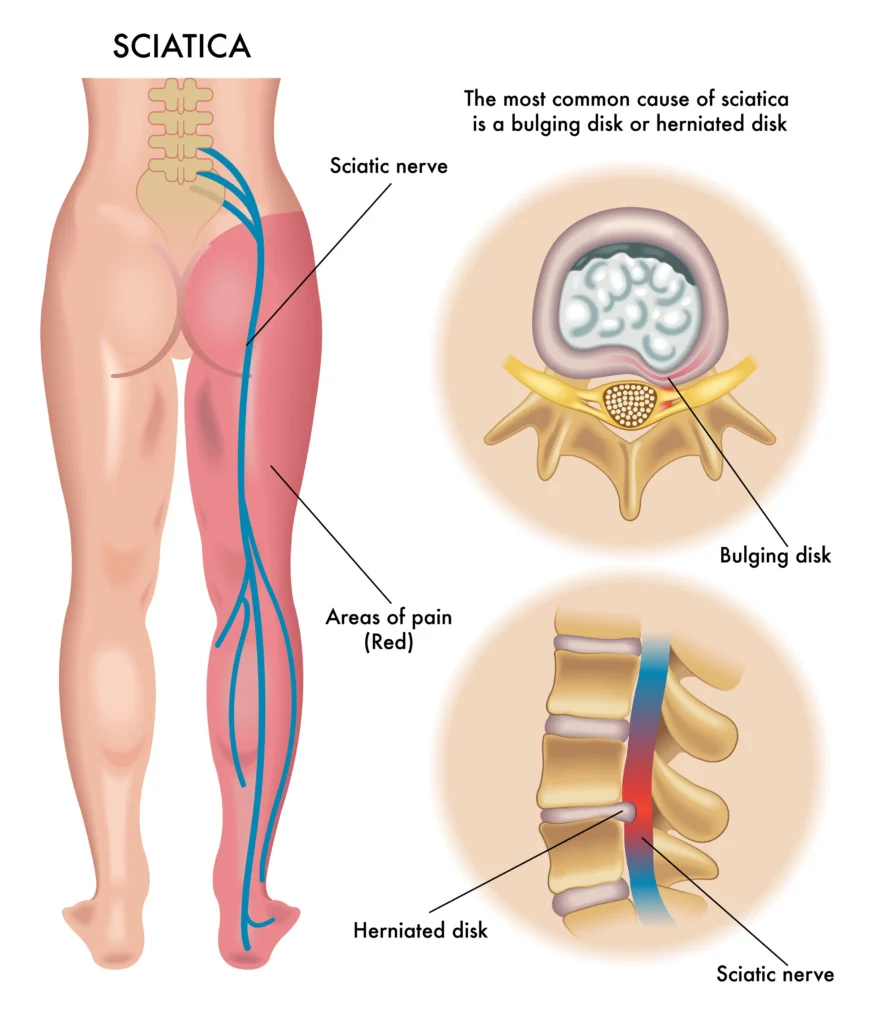
Sciatica is not a diagnosis in itself. It’s a set of symptoms produced by irritation or compression of the sciatic nerve, which runs from the lower lumbar spine through the buttock and down the back of the leg into the foot. The most common cause is a herniated or bulging disc pressing against one of the nerve roots in the lower back. Spinal stenosis (narrowing of the spinal canal) and piriformis syndrome are also common drivers.
The key point is that the radiating pain, numbness, tingling, and weakness you feel in your leg are downstream effects of a problem happening in your spine or surrounding structures. Treating the downstream symptoms without addressing the upstream cause is why so many people end up in a cycle of temporary relief followed by another flare.
What Happens Over Time Without Treatment
Pain becomes more frequent and more severe.
Early sciatica often comes and goes. Episodes may be triggered by sitting too long, lifting something awkward, or sleeping in the wrong position, and then ease off with rest. Over time, without treatment, the underlying cause tends to progress. A disc that is already herniated can worsen. Spinal stenosis, which is a degenerative condition, continues to advance. What was once intermittent pain becomes more constant, and the triggers that set it off multiply.
Nerve damage can become permanent.
This is the concern that matters most over the long term. The sciatic nerve is resilient, and early compression often causes temporary dysfunction — the burning, tingling, and numbness that most sciatica patients experience. But prolonged or repeated nerve compression can cause structural damage to the nerve itself. Once nerve tissue is significantly damaged, recovery becomes much more difficult and in some cases incomplete. The window for full recovery narrows the longer compression goes on.
Muscle weakness progresses.
Nerve compression doesn’t just cause pain. It interferes with the nerve signals that control muscle function. Many sciatica patients notice weakness in the affected leg over time, difficulty lifting the foot, reduced balance, or a general sense that the leg isn’t responding the way it should. This weakness can become more pronounced and harder to reverse as compression continues.
Secondary problems develop.
When one part of the body isn’t working properly, other parts compensate. People with chronic sciatica often develop secondary issues including hip pain, knee pain, altered gait patterns, and muscle imbalances throughout the lower body. These compensatory patterns can create their own pain cycles that persist even after the original sciatica is addressed.
In severe cases, more serious complications can arise.
While uncommon, prolonged significant nerve compression can in rare cases affect bowel or bladder function. This represents a medical emergency and requires immediate evaluation. It’s worth knowing that this level of progression is almost always preceded by a long period of worsening symptoms that could have been addressed earlier.
Why Rest Alone Isn't Enough
Rest can calm an acute flare. Ice, heat, and over-the-counter anti-inflammatories can take the edge off. But none of these approaches do anything about the disc, the narrowed canal, or the muscle dysfunction that’s producing the nerve compression in the first place.
The same is true of medications like muscle relaxants or even steroid injections. These are tools for managing symptoms, and they have a place. But for the majority of sciatica patients, they buy time rather than solve the problem. When the medication wears off or the injection effect fades, the underlying issue is still there.
Meaningful, lasting improvement in sciatica almost always requires treatment that addresses the source of nerve irritation directly.
What Addressing Sciatica Early Actually Looks Like
The good news is that sciatica, particularly when caught before significant nerve damage has occurred, responds well to non-invasive treatment that targets the root cause.
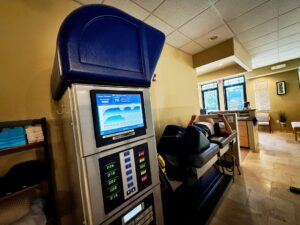
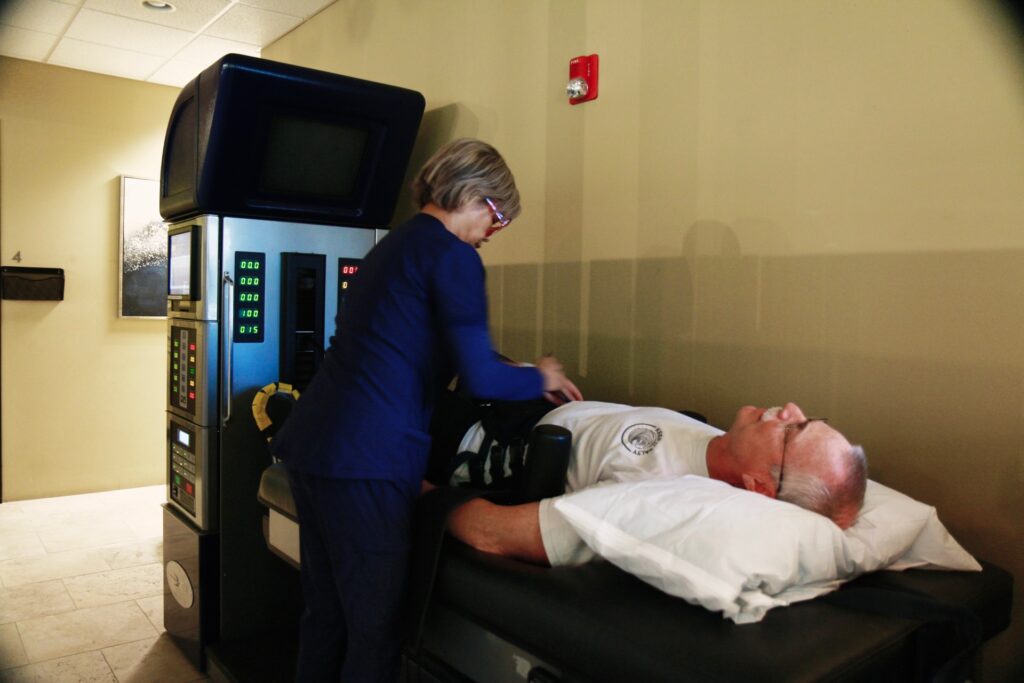
At LaserTech, our approach starts with understanding exactly what’s driving a patient’s sciatica…whether that’s a herniated disc, spinal stenosis, piriformis involvement, or a combination…because the cause shapes the treatment. For disc-related sciatica, spinal decompression therapy using the DRX9000 is often central to care, working to gently decompress the affected disc and allow herniated material to retract away from the nerve. Cold laser therapy, shockwave therapy, and other physiotherapy modalities and technologies are used alongside to address inflammation, support tissue healing, and restore healthy nerve function.
The patients who tend to see the most complete recovery are those who come in before the condition has had years to progress. That’s not a sales pitch. It’s simply the pattern that plays out clinically over and over again.
If You've Already Been Waiting
If you’ve been managing sciatica for months or years, that doesn’t mean you’ve missed your window. Many of LaserTech’s patients come in after long periods of trying other approaches, and many of them still find significant relief. One patient, Silke S., described arriving with chronic lower back pain, sciatica, a herniated disc, and soft tissue issues after years of living with the condition. After a full course of treatment, she reported feeling about 95% improved and was back to golfing, biking, and walking.
The point isn’t to create urgency for its own sake. It’s that every month spent waiting is another month of potential progression, and the treatment path that was straightforward early on can become more involved over time.

A Free Conversation Is a Good Place to Start
If sciatica has been something you’ve been managing on your own — or something you’ve been putting off addressing — a free consultation with Dr. Zimmerman is a low-stakes way to get clarity. During that visit, he works to identify what’s actually causing your symptoms and whether the physiotherapy modalities and technologies at LaserTech are a good fit for your situation. There’s no commitment involved, and you leave with a better understanding of where things stand and what your options are.
LaserTech Pain and Back Relief Center serves patients throughout Scottsdale, Phoenix, and the surrounding East Valley. Dr. Zimmerman provides non-invasive care for sciatica, herniated discs, spinal stenosis, and a wide range of chronic back and nerve pain conditions.